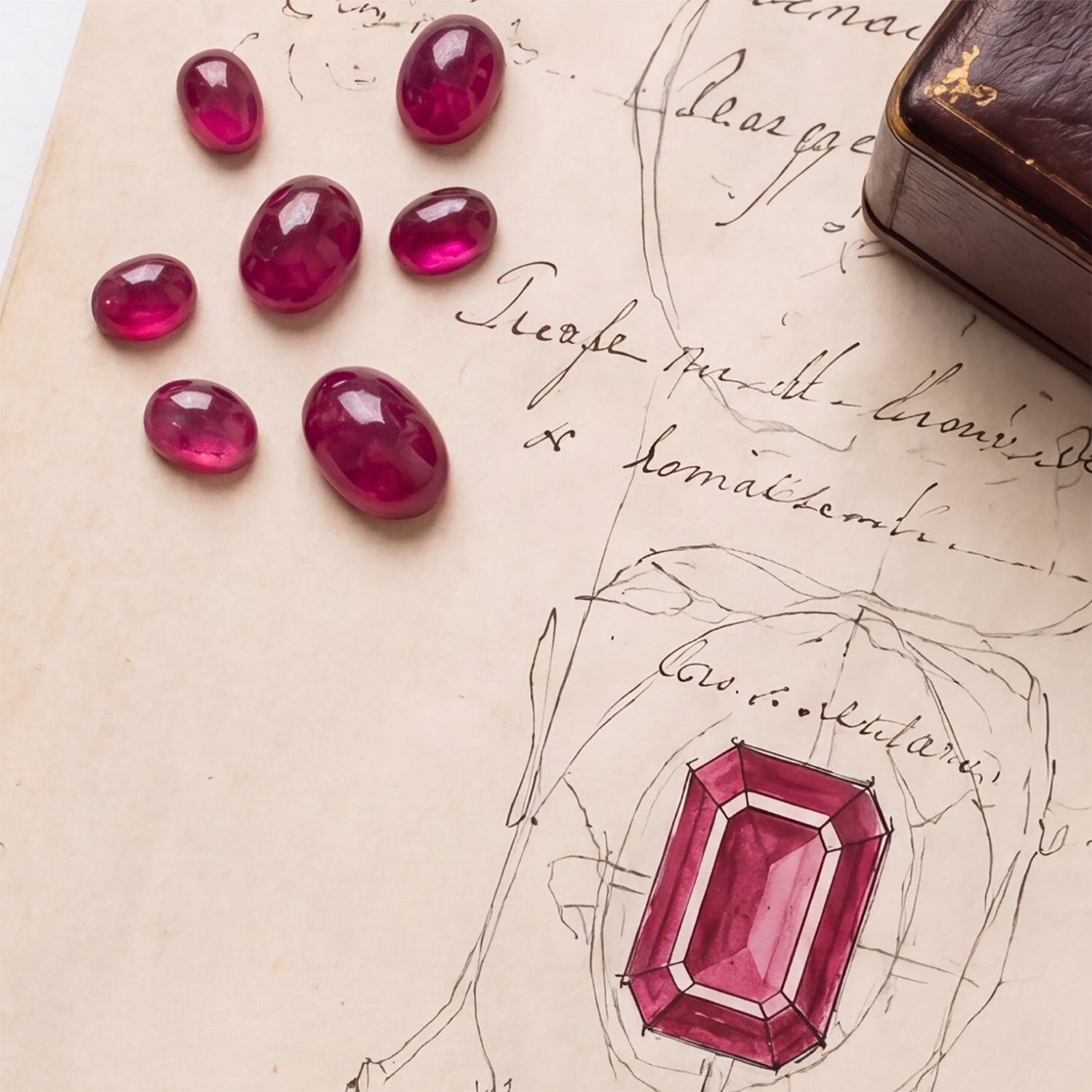
The King of Precious Stones
Why Ruby Has Captivated the World for Centuries
Some gemstones are admired for their beauty. Others are remembered for the stories they carry. For thousands of years, people also believed certain gemstones held extraordinary powers, shaping medicine, ritual, trade, and tradition.
Few have a story as rich as ruby.

July's birthstone has long been treasured not only for its remarkable beauty, but also for the strength, protection, and vitality it was believed to bring to the person who wore it.
Long before gemstones were understood by science, they were simply named for what people saw. Ruby takes its name from the Latin word ruber, meaning red, a fitting name for a gemstone whose fiery color has captivated civilizations for centuries.
Across the world, ruby came to symbolize courage, prosperity, and enduring love. Ancient Indian texts referred to ruby as Ratnaraj, or The King of Precious Stones, believing it held the highest place among all gems. In Burma, warriors carried rubies as symbols of protection. Across Europe, royalty prized them as treasures worthy of crowns and ceremonial jewels.

Ruby was never simply decorative. It represented power, devotion, and the hope of a long and fortunate life.
That reverence can still be seen in some of the world's most extraordinary jewelry. Rubies have adorned royal collections, ceremonial objects, and treasured heirlooms for centuries. Many of the antique Indian jewels that continue to inspire our work at Lulu feature ruby at their center, celebrated not only for its beauty but for the history and symbolism it carries.
Then, in the early nineteenth century, science revealed something unexpected. Ruby and sapphire are not separate gemstones at all. They belong to the same mineral family, corundum.
The difference is color.
When corundum contains enough chromium to create its unmistakable red hue, it is called ruby. Every other color, including blue, yellow, green, violet, and pink, is classified as sapphire.
Rather than making ruby seem less extraordinary, this discovery revealed just how rare it truly is.

Nowhere is that more evident than in Burma, now known as Myanmar, where the world's finest rubies have been mined for centuries. The region's unique geology produces stones with an intense, glowing red often described as 'pigeon's blood,' a color prized for its remarkable richness and brilliance.
Perhaps that's what continues to make ruby so compelling. It belongs equally to history and to science. It has inspired myths, crowned kings, and fascinated gemologists. Through it all, it has never lost its sense of wonder.

At Lulu, we're continually inspired by gemstones with stories to tell. Influenced by jewelry traditions from around the world, especially the artistry of India, we're drawn to pieces that carry history as beautifully as they carry light. Whether it's the bold richness of ruby or the delicate blush of pink sapphire, these gemstones remind us that jewelry has always been more than adornment. It becomes part of our story and, over time, part of our legacy.
This July, we're celebrating the remarkable gemstone family behind ruby and sapphire and the centuries of craftsmanship, symbolism, and beauty they continue to inspire.
EXPLORE THE COLLECTION
Discover our favorite ruby, pink sapphire, and sapphire designs, each celebrating a differentexpression of one extraordinary gemstone family.